Quick answer: You can adjust brightness on Windows 7 using shortcut keys, Control Panel, or Windows Mobility Center. If brightness is not working or you’re using an external monitor, you can use a brightness control tool like CareUEyes for easier control.
These keys work on most laptops, but may vary depending on the manufacturer (HP, Dell, Lenovo, etc.).
If shortcut keys don’t work, it’s usually due to missing drivers or disabled settings. See the fix section below.
Method 2: Adjust Brightness via Control Panel
Click Start
Open Control Panel
Go to Hardware and Sound
Click Power Options
Use the brightness slider at the bottom
This is the most standard way to adjust brightness in Windows 7.
Method 3: Use Windows Mobility Center
Press Windows Key + X
Find Display Brightness
Adjust the slider
This method is faster than using the Control Panel and works on most laptops.
Method 4: Use a Brightness Control Tool (e.g., CareUEyes)
If you’re using a desktop computer or an external monitor, Windows 7 cannot directly control screen brightness.
In this case, you can:
– Use the physical buttons on your monitor – Open the monitor menu (OSD) – Adjust brightness manually
However, this method is not very convenient.
A better solution is to use a brightness control tool like CareUEyes, which allows you to adjust brightness using your mouse and works on external monitors as well.
If none of these methods work, use a brightness control tool below.
Best Way to Control Brightness Easily (Recommended)
While Windows 7 provides basic brightness controls, they have limitations—especially on external monitors or when shortcut keys don’t work.
Tools like CareUEyes offer a more flexible solution:
– Adjust brightness using your mouse (no hardware limitations) – Works on external monitors – Add custom shortcut keys – Reduce eye strain by dimming your screen below the minimum brightness supported by Windows (ideal for night use) – Automatically adjust brightness based on time of day, so your screen stays comfortable in both daytime and nighttime environments(optional)
This makes it a more convenient and reliable way to control brightness compared to built-in system options.
FAQ
How do I adjust brightness on Windows 7?
Use shortcut keys (Fn + F9/F10), Mobility Center (Win + X), Power Options or a brightness control tool like CareUEyes for easier control.
Why can’t I change brightness on Windows 7?
This is usually caused by outdated drivers or disabled monitor settings.
What is the shortcut key for brightness?
Fn + F9 decreases brightness, and Fn + F10 increases brightness on most laptops.
Why is the brightness slider missing?
Your display driver may not be installed correctly or the monitor is not recognized.
How do I fix a dim screen?
Update your graphics driver or use a brightness control tool.
Final Tip
For most users, shortcut keys or Mobility Center are the fastest ways to adjust brightness. If those methods don’t work, fixing drivers or using a dedicated brightness control tool is the most reliable solution.
Looking for a blue light filter for PC? Let’s find the right solution for your eyes.
Why a Blue Light Filter for PC Is Essential for Eye Health
Blue light from screens can cause eye strain, fatigue, and disrupt sleep—especially at night. A blue light filter reduces harmful blue light and helps you stay comfortable during long hours of screen use.
How to Choose Blue Light Filter Software for PC and Laptop
When selecting a blue light filter software for PC or blue light filter software for laptop, several factors come into play, such as compatibility, customization options, and ease of use. You’ll want software that can adjust the color temperature and brightness based on your activities, whether you’re working, gaming, or watching movies.
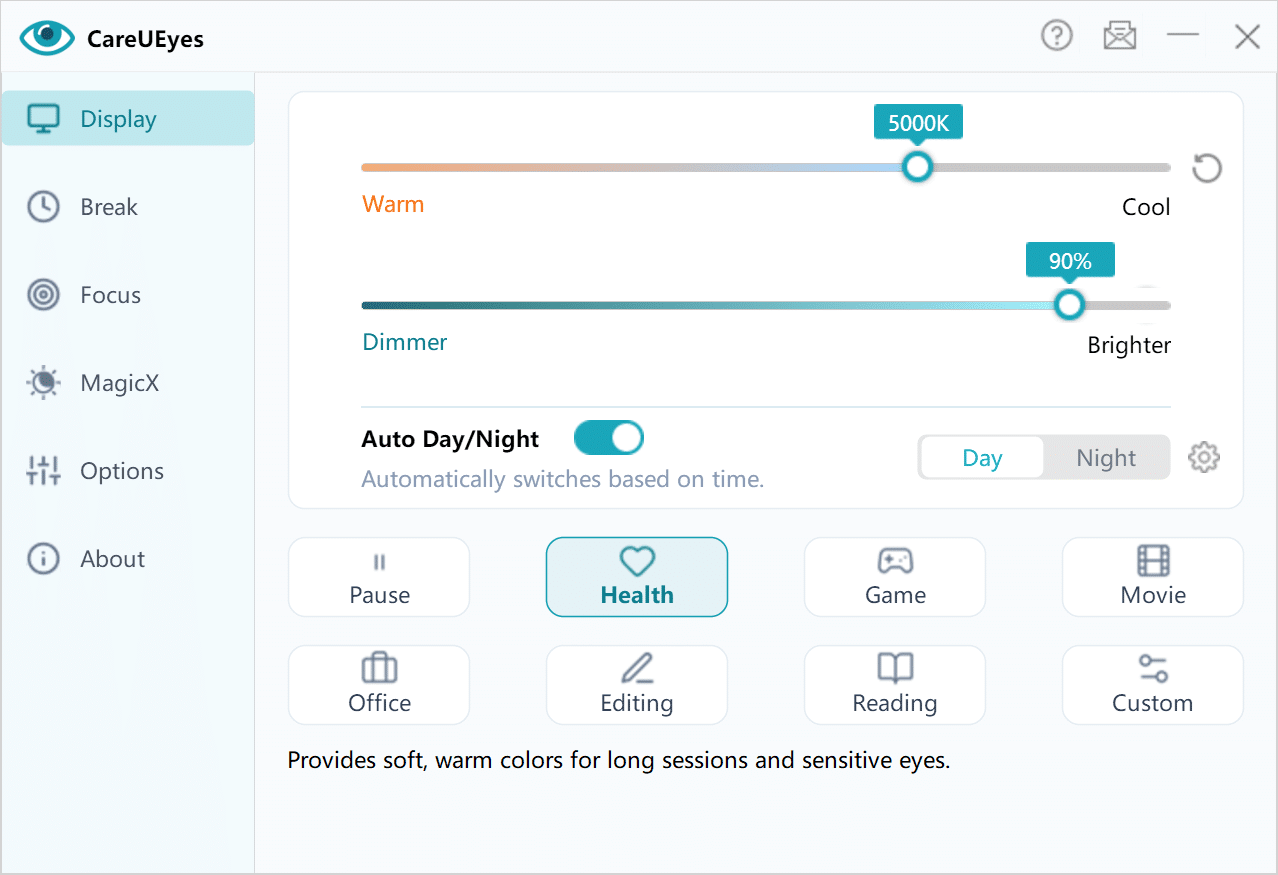
CareUEyes is a blue light filter for PC designed to reduce eye strain. It offers 8 ready-to-use eye protection modes, each with carefully optimized color temperature and brightness—just choose a mode and enjoy instant comfort.
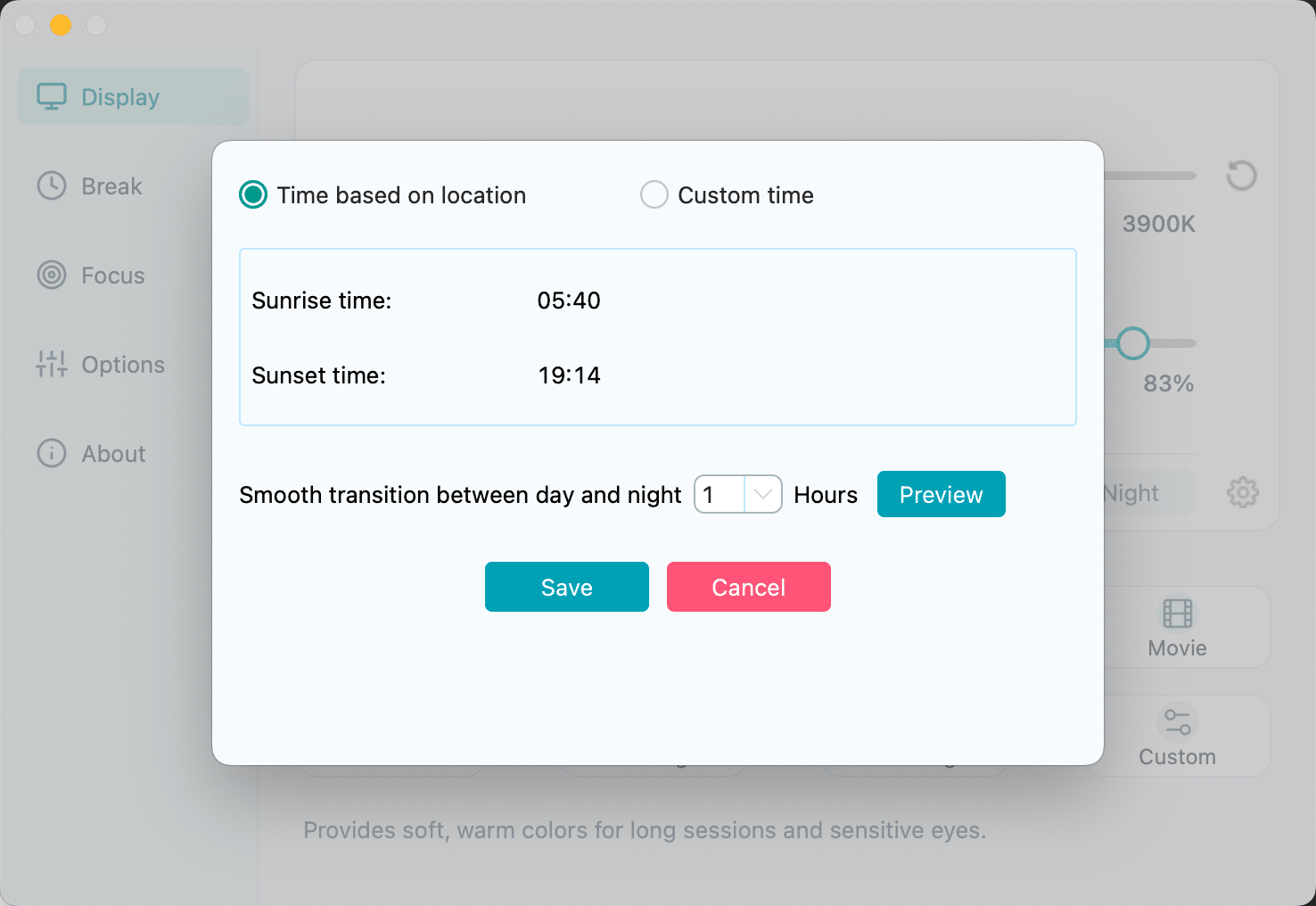
You can also customize each mode to match your preferences. CareUEyes automatically adjusts your screen based on local sunrise and sunset, with smooth transitions that keep your eyes comfortable throughout the day.
Why CareUEyes Is Better Than Basic Blue Light Filters
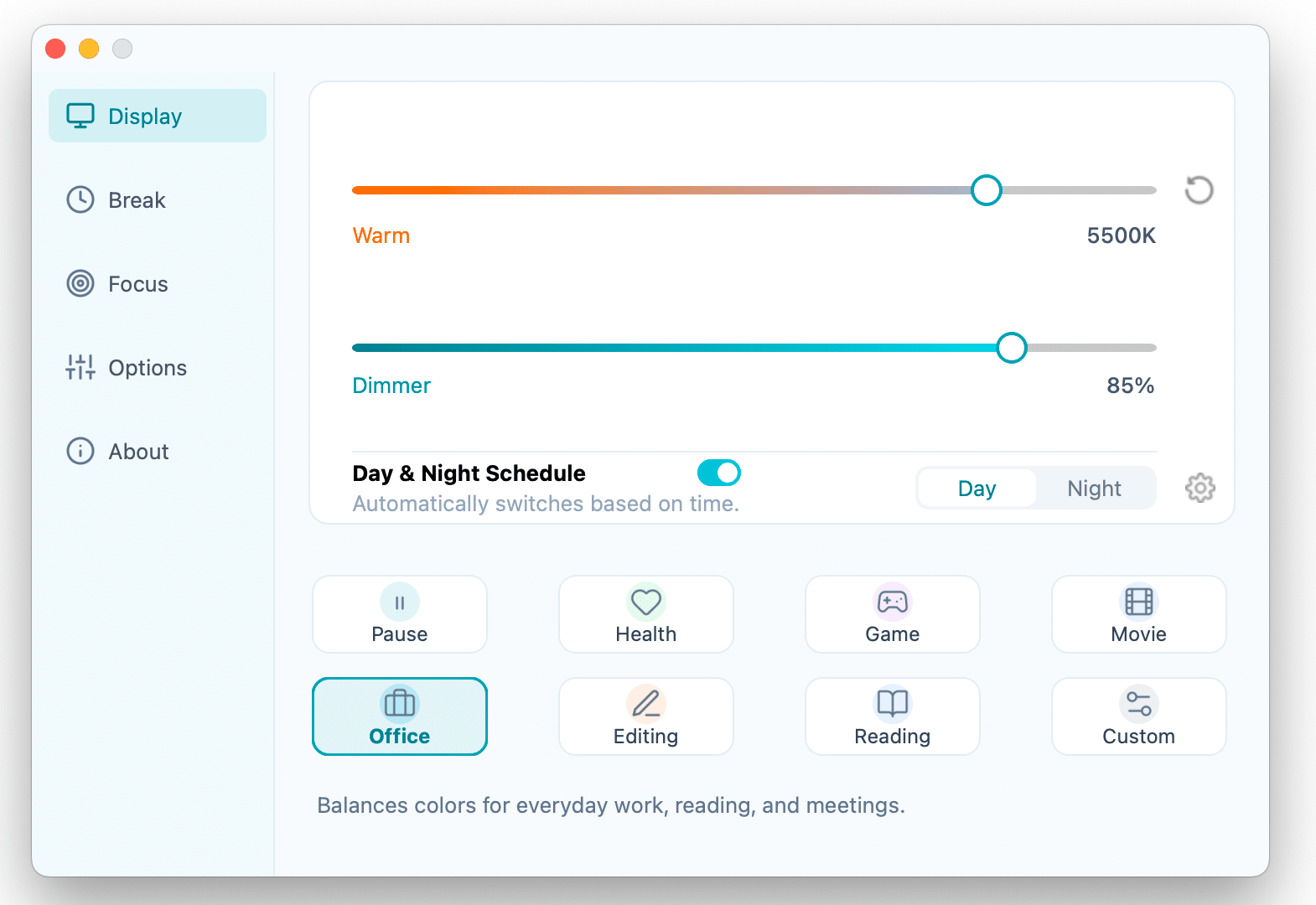
CareUEyes provides 8 preset modes: Health, Office, Reading, Game, Movie, Editing, Custom, and Pause. Each mode comes with carefully set color temperature and brightness, so you can start using it immediately without any setup and quickly find a mode that fits your situation.
Fully Customizable Color Temperature for Eye Comfort
You can adjust the color temperature and brightness of every mode to match your personal preference. This allows you to create a screen environment that feels comfortable for your eyes, so you can reduce eye strain during long hours of use.
Automatic Day and Night Blue Light Adjustment for Better Sleep
CareUEyes automatically changes the screen color based on your local sunrise and sunset time. The transition is smooth and gradual, so your eyes can adapt naturally and you can maintain a healthier sleep routine.
Take True-Color Screenshots Without Blue Light Yellow Tint
Unlike many blue light filters, CareUEyes does not affect your screenshots. Your screenshots will keep their original colors without any yellow tint, so you can share or work with accurate visuals without extra editing.
Wide Color Temperature Range for Better Blue Light Control on PC
CareUEyes offers a much wider adjustment range than most similar tools. You can fine-tune your screen from very warm to very cool, so you can stay comfortable in any lighting condition, day or night.
Multi-Monitor Blue Light Control on PC for Consistent Eye Comfort
If you use multiple monitors, you can adjust each screen separately or apply the same settings to all screens with one click. This makes it easier to keep a consistent viewing experience, so your eyes don’t need to constantly readjust between screens.
Set Blue Light Filter Rules for Different Apps on PC
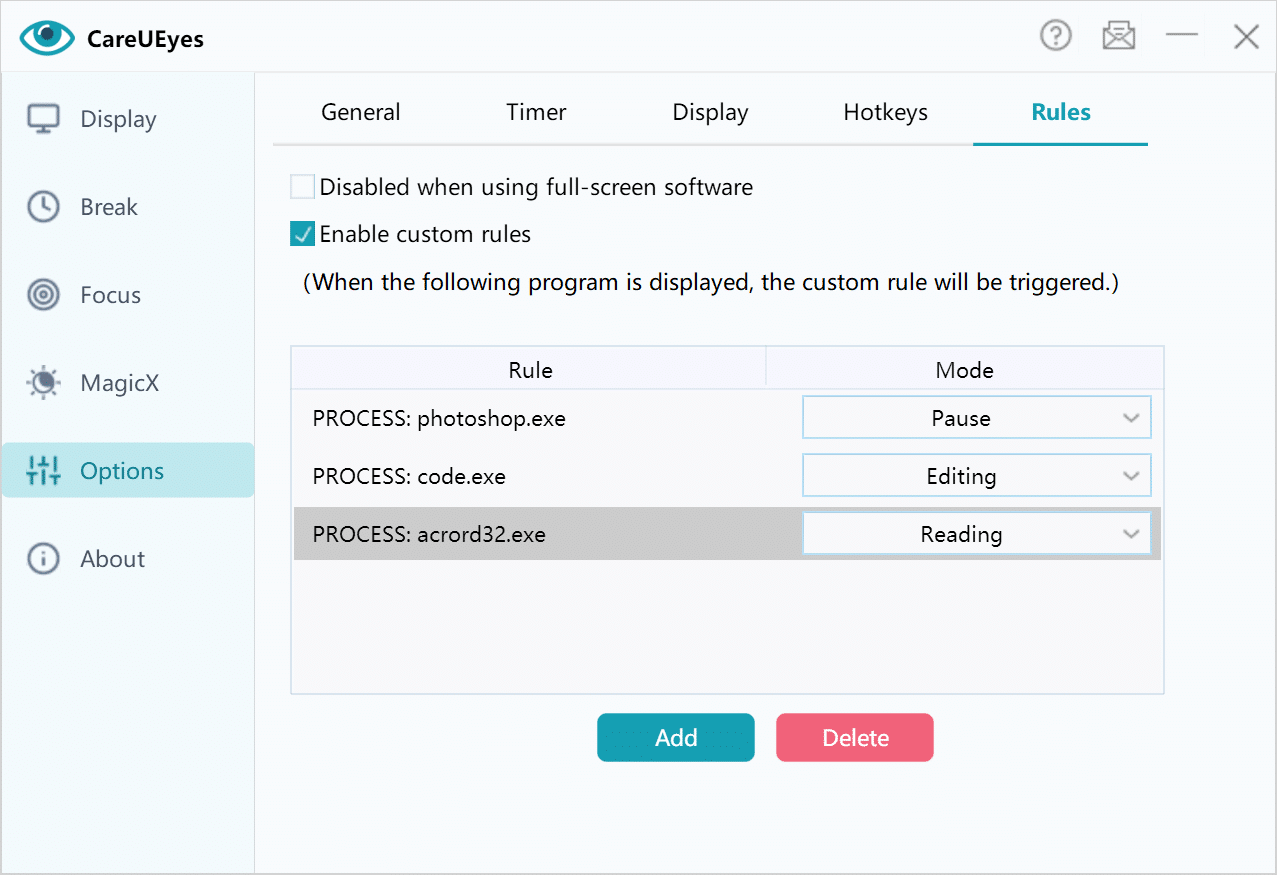
You can set different mode for different applications. For example, you can set Reading mode for PDF apps and Editing mode for coding tools. CareUEyes will switch automatically when you open or switch between apps.
Use Hotkeys to Adjust Blue Light Settings Instantly on PC
CareUEyes allows you to set custom keyboard shortcuts. You can quickly change modes or settings at any time, so you don’t have to interrupt your workflow.
More Control Than Windows Night Light for Blue Light and Brightness
Compared to Windows Night Light, CareUEyes gives you more control over both brightness and color temperature. This gives you more flexibility, so you can fine-tune your screen exactly the way you want.
Beyond Blue Light Filtering
CareUEyes also includes advanced brightness control and smart break reminders to better protect your eyes.
Unlike basic screen dimming, it adjusts brightness without flicker, reducing eye fatigue in both bright and low-light environments. At the same time, built-in break reminders encourage you to rest your eyes regularly—helping prevent dryness, strain, and long-term discomfort.
Blue Light Filter for PC Reviews: What Users Say About CareUEyes
CareUEyes has received overwhelmingly positive feedback from users on Facebook. Many users report that it significantly reduces eye strain, especially during long hours of screen use.
Users particularly appreciate its flexible brightness and color temperature controls, with some describing it as an “eye saver” that makes screen time much more comfortable.
From light-sensitive users to professionals working long hours, CareUEyes is widely recommended for its effectiveness, ease of use, and noticeable impact on visual comfort.
Follow these easy steps to start protecting your eyes today:
Download the Blue Light Filter App for PC: Visit the official CareUEyes website to download the software for Windows or your laptop.Download
Install and Launch: After installation, open the program and select the preferred blue light filter.
Adjust the Settings: Choose from preset modes like Health, Game, and Movie, or manually adjust the color temperature and brightness to suit your needs.
Blue Light Filter for PC FAQs (Common Questions Answered)
Q: How does a blue light filter work on a PC or laptop? A blue light filter works by adjusting the color temperature of your screen, reducing the amount of blue light emitted. This helps alleviate eye strain and prevents the disruption of your sleep cycle.
Q: What’s the difference between a blue light filter and a blue light screen protector? A blue light screen protector is a physical filter that can be attached to your device, whereas a blue light filter software for PC or laptop is a digital tool that adjusts the screen’s settings.
Q: Can I use CareUEyes as a blue light filter for Windows 10? Yes, CareUEyes is fully compatible with Windows 10 and other versions of Windows. It also supports multiple monitors, so you can protect all your screens at once.
Q: Is CareUEyes the best blue filter app for PC? Yes, CareUEyes is one of the best blue filter apps for PC available due to its robust features and ease of use. It’s designed to reduce eye strain, improve sleep, and offer customizable settings for all your devices.
Download Blue Light Filter for PC
If you spend long hours on your computer, a better blue light filter can make a real difference in comfort and sleep quality. CareUEyes provides a simple and effective solution.
Control your screen brightness instantly — without opening system settings. Adjust brightness using a simple slider or hotkeys, and manage multiple monitors with ease.
CareUEyes is a lightweight and trusted brightness control tool that helps you manage screen brightness quickly and comfortably. It works as both a screen dimmer and a screen brightener, giving you full control in any lighting condition.
Instead of relying on built-in Windows controls, CareUEyes gives you a faster and more flexible way to adjust brightness.
You can change brightness instantly without opening settings, making it easier to switch between tasks or work across multiple displays.
Key Features of the Screen Brightness Adjuster
Instant Brightness Adjustment
Adjust brightness in real time using a simple slider or keyboard shortcuts. No need to open Windows settings.
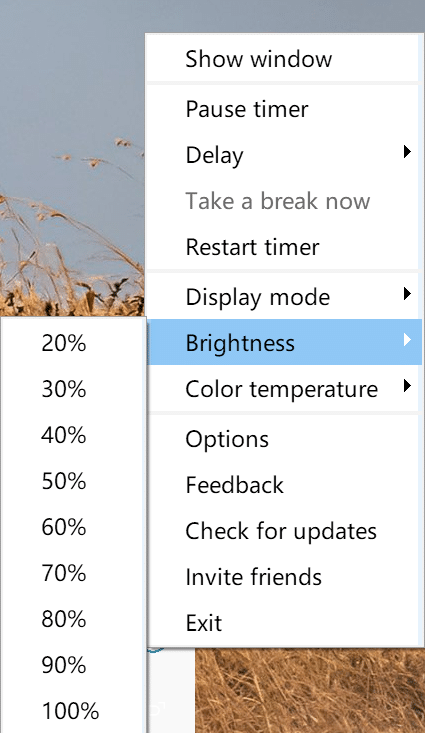
You can also adjust brightness directly from the system tray menu, making quick adjustments even faster and more convenient.
Multi-Monitor Support
Control brightness across multiple monitors from one place — including external displays. Adjust each screen independently or sync all monitors to change brightness together.
Precise Brightness Adjustment
Fine-tune brightness levels to match your environment, whether you’re working, reading, or watching content.
Smart Brightness Scheduling
Automatically control brightness with smart scheduling. Set your preferred brightness for day and night, and let it adjust automatically in the background.
Lightweight & Easy to Use
Minimal interface, fast response, and designed for everyday use without complexity.
Full Control Over Your Screen Brightness
With CareUEyes, you get full control over how your screen brightness works.
Adjust brightness instantly, control multiple monitors, and automate changes — all in one simple and efficient tool.
Looking for a night mode for PC? Choose the option that fits your system:
✔ Windows 10/11 users: Enable built-in Night Light for Windows or use CareUEyes (a more advanced night mode app for PC with brightness and color adjustment) for better eye comfort
✔ Automatically adjusts brightness and color together ✔ Follows sunrise and sunset for natural eye comfort ✔ Smooth transition between day and night ✔ No flicker, no performance impact ✔ Works on Windows 11/10/8/7/XP ✔ Automatic light & dark mode switching
What Is Night Mode on PC?
Night mode on PC is designed to reduce eye strain and improve comfort in different lighting conditions.
Most people think night mode only reduces blue light, but that’s only part of the story.
A complete night mode for PC solution should include:
Color temperature adjustment
Brightness adjustment
Adaptation to time of day
Eye comfort is not just about reducing blue light — it’s about balancing brightness and color temperature together.
How to Turn On Night Mode for Windows (Built-in Night Light)
So how does Windows handle night mode?
Windows includes a feature called Night Light, which acts as a basic night mode for Windows.
It can automatically turn on based on sunrise and sunset, but its functionality is limited.
Windows Night Light is only available in Windows 10 and later, so it is not an option for users on Windows 7 or 8.
Method 1: Enable Night Light on Windows 10/11
Open Settings
Go to System > Display
Turn on Night Light
Adjust strength and schedule
This provides a basic night light for PC experience.
Method 2: Use Dark Mode (Helpful, but Not a Complete Night Mode)
Dark Mode changes the UI to darker colors, which can reduce glare and make the screen more comfortable in low-light environments.
✔ Reduces perceived brightness from bright UI elements ✔ More comfortable for night-time use ✔ Helpful for long reading or coding sessions
However:
Dark mode is not a complete night mode for PC.
It does NOT:
• Adjust screen brightness • Reduce blue light effectively • Switch automatically based on time (in Windows)
It improves appearance, but does not fully protect your eyes.
For a complete solution, you need both display adjustments and automatic theme switching.
Why Windows Night Light Is Not Enough
While night light is useful, it only solves part of the problem.
❗ Key limitations
Windows Night Light:
Only adjusts color temperature
Does not adjust brightness
Uses a short, fixed transition period (not customizable)
Does not support automatic dark mode switching
As a result, the screen may still feel too bright at night, even if the color looks warmer.
Best Night Mode App for PC (Free Download Included)
If you want a better experience, using a night mode app for PC is the best choice.
Windows Night Light vs f.lux vs CareUEyes
Feature
Windows Night Light
f.lux
CareUEyes
Adjust color temperature
✅
✅
✅
Adjust brightness
❌
❌
✅
Sync brightness + color
❌
❌
✅ ⭐
Day & night automatic adjustment
✅
✅
✅
Smooth transition
⚠️ Limited
✅
✅
Custom transition duration
❌
⚠️ Limited
✅
Automatic dark mode switching
❌
❌
✅ ⭐
Supported Windows versions
Windows 10+ only
Windows 7+
Windows XP/7/8/10/11 ✅
Most tools like Windows Night Light and f.lux only adjust color temperature.
CareUEyes goes further by adjusting both brightness and color together, and even automatically switching between light and dark modes — creating a complete day-to-night experience.
Why This Matters
A true night mode for PC should do more than just change screen color.
Eye comfort depends on:
Brightness
Color temperature
Visual theme (light vs dark)
CareUEyes combines all of them into one system, while most tools only handle part of the problem.
Why CareUEyes Is the Best Night Screen for PC
CareUEyes provides a complete night screen for PC experience.
Adaptive Brightness and Color (Core Advantage)
Most tools only change color temperature.
CareUEyes adjusts both brightness and color temperature together based on the time of day.
Daytime → brighter and cooler
Nighttime → dimmer and warmer
This creates a more natural and comfortable viewing experience.
Your screen adapts naturally — not just changes color.
Follows Natural Light Rhythm
Automatically adapts based on sunrise and sunset
Continuous adjustment throughout the day
More natural than fixed-time changes
Smooth Transition Between Day and Night
Gradual transition around sunrise and sunset
Adjustable duration (0–5 hours)
No sudden color shifts
Automatic Dark Mode Switching
CareUEyes can automatically switch between light and dark modes:
Follow time or sunrise/sunset
No manual switching required
Works seamlessly with system themes
Windows does not provide built-in automatic switching for dark mode.
Works on All Windows Versions
CareUEyes works on Windows 11, 10, 8, and 7.
Unlike Windows Night Light, which is only available in Windows 10 and later, CareUEyes provides full functionality across all supported systems.
• Digital eye strain (also known as Computer Vision Syndrome) affects up to 90% of people who work on computers.
• Common symptoms include dry eyes, blurred vision, headaches, neck pain, and difficulty sleeping.
• It is mainly caused by blue light exposure, excessive screen brightness, and reduced blinking during prolonged screen use.
• In most cases, digital eye strain is temporary and improves after resting the eyes.
• Tools like CareUEyeshelp reduce digital eye strain by filtering blue light, controlling screen brightness, and reminding you to take regular breaks.
Digital Eye Strain is increasingly common in today’s digital world. According to the American Optometric Association, between 50% and 90% of people who work on computers experience symptoms of Digital Eye Strain, also known as Computer Vision Syndrome.
Fortunately, you don’t have to give up using computers to protect your eyes. By understanding the causes of digital eye strain and using the right tools, it is possible to significantly reduce eye fatigue and improve visual comfort.
What is Digital Eye Strain?
Digital Eye Strain is a group of eye and vision-related problems that result from prolonged computer, tablet, e-reader, and cell phone use. When we look at screens, our eyes have to work much harder than they do when reading printed text.
Common symptoms of Digital Eye Strain include:
Dry, red, or irritated eyes
Blurred or double vision
Headaches and migraines
Neck and shoulder pain
Difficulty sleeping (Insomnia)
What Causes Digital Eye Strain?
Digital eye strain is typically caused by three main factors: exposure to high-energy blue light, screen brightness that does not match the surrounding environment, and reduced blinking while focusing on digital screens. Studies show that people blink up to 66% less frequently when looking at a monitor, which can quickly lead to dry and irritated eyes.
Who is Most at Risk?
Digital Eye Strain doesn’t affect everyone the same way. You are at a significantly higher risk if you belong to these groups:
Software Developers & Designers: Spending 8+ hours in “Deep Work” mode means your eyes are locked onto high-contrast code or tiny design pixels, leading to severe focus fatigue.
Students & Gamers: Long sessions of late-night study or gaming expose your eyes to massive amounts of blue light, which can ruin your sleep quality and focus for the next day.
Contact Lens Wearers: Digital screens cause you to blink less frequently. For contact lens users, this leads to rapid lens dehydration, making your eyes feel “gritty,” red, and irritated.
Remote Workers: Often working in home environments with suboptimal lighting or improper desk heights, which increases the physical strain on your neck and eyes.
How Long Does Digital Eye Strain Last?
Digital eye strain usually lasts from a few hours to several days depending on how long your eyes were exposed to screens. Most symptoms improve after resting the eyes and reducing screen exposure.
Is Digital Eye Strain Permanent?
Digital eye strain is not permanent in most cases. It is usually a temporary condition caused by prolonged use of computers, smartphones, and other digital screens. Symptoms such as dry eyes, blurred vision, headaches, and eye fatigue typically improve after resting your eyes or reducing screen exposure.
However, if digital eye strain occurs frequently and good eye care habits are not followed, the discomfort can become persistent and significantly affect daily productivity and comfort.
How CareUEyes Helps Reduce Digital Eye Strain
Treating digital eye strain requires a multi-faceted approach because different symptoms are caused by different screen-related factors. CareUEyes is designed as a complete eye protection solution for PC users. By addressing the main causes of digital eye strain—blue light exposure, excessive screen brightness, and prolonged screen focus—it helps relieve common symptoms such as dry eyes, headaches, blurred vision, and sleep problems.
One of the most common symptoms of digital eye strain is difficulty sleeping and eye fatigue in the evening. This often happens because computer screens emit a large amount of short-wavelength, high-energy blue light. Blue light scatters easily in the eye, reducing visual contrast and forcing your eyes to work harder to maintain focus. More importantly, excessive blue light exposure at night suppresses melatonin production, which can disrupt your natural sleep cycle and lead to insomnia.
CareUEyes solves this problem with intelligent blue light filtering and color temperature adjustment. By lowering the screen’s color temperature, the software significantly reduces harmful blue light emissions.
For example, CareUEyes can automatically adjust screen color temperature based on local sunrise and sunset times. During the evening and night, the screen becomes warmer with less blue light, which helps your eyes relax and supports healthier sleep patterns.
You can also enable blue light filtering instantly by selecting preset modes such as Office, Health, or Game mode. After choosing a preset, you can further fine-tune the color temperature using the slider to achieve the most comfortable viewing experience.
2. Smart Brightness Control & Screen Dimmer
Another common symptom of digital eye strain is headaches, eye irritation, and blurred vision, which are often caused by screen brightness that does not match the surrounding environment.
For example, looking at a bright monitor in a dark room forces your eyes to constantly adapt to extreme contrast. Over time, this can lead to headaches, red eyes, and visual fatigue. Even worse, many monitors remain too bright even when the hardware brightness is set to 0%.
CareUEyes solves this with advanced screen brightness control and screen dimmer technology. It allows you to fine-tune your screen brightness far beyond normal hardware limits, creating a softer and more comfortable viewing experience.
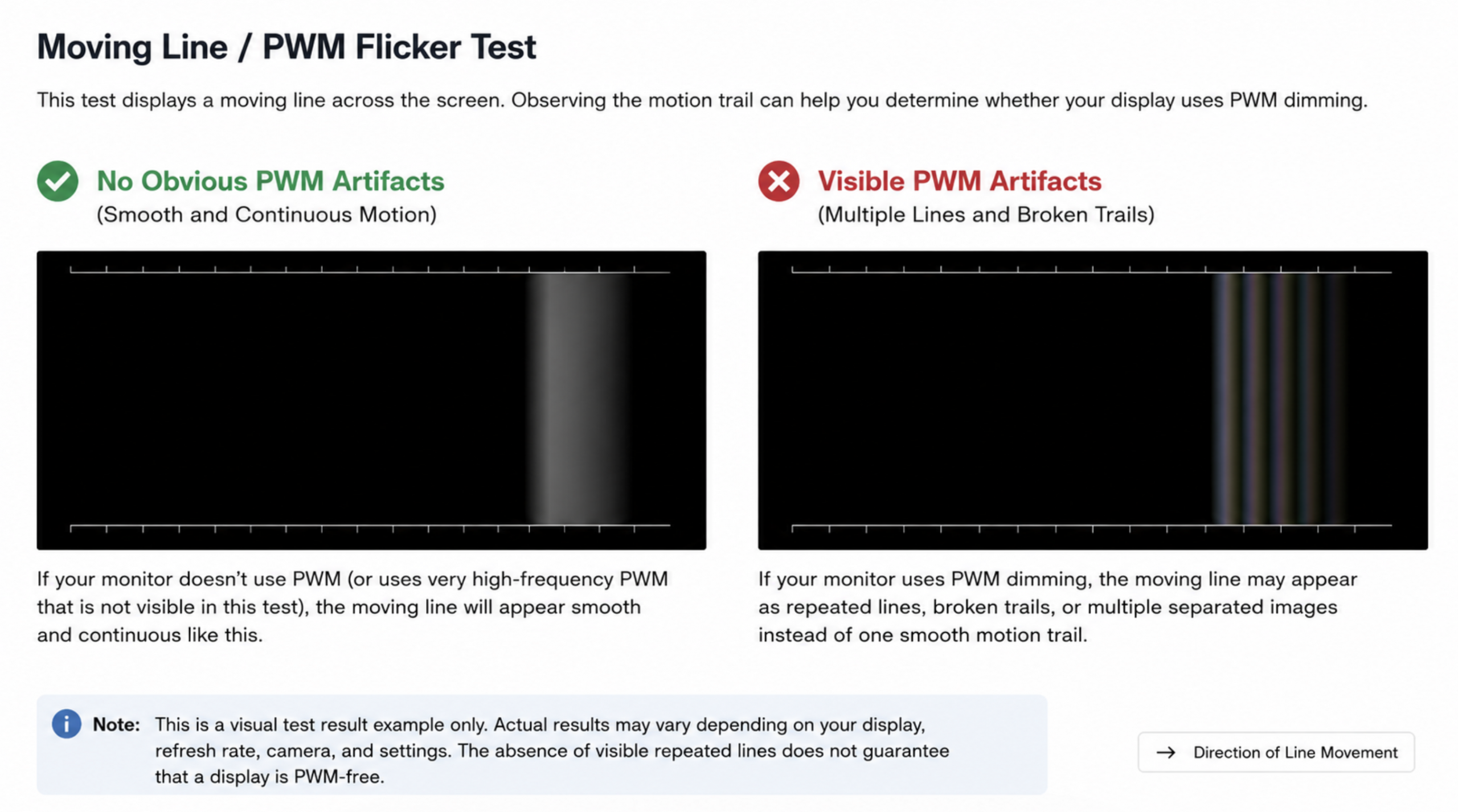
The built-in screen dimmer can safely reduce brightness without flickering, which helps minimize visual strain during long working sessions. In addition, CareUEyes can automatically adjust screen brightness based on local sunrise and sunset times. As evening approaches, the screen gradually becomes dimmer and warmer, which helps reduce eye fatigue and supports healthier sleep.
This significantly reduces symptoms such as eye irritation, headaches, and blurred vision caused by overly bright screens.
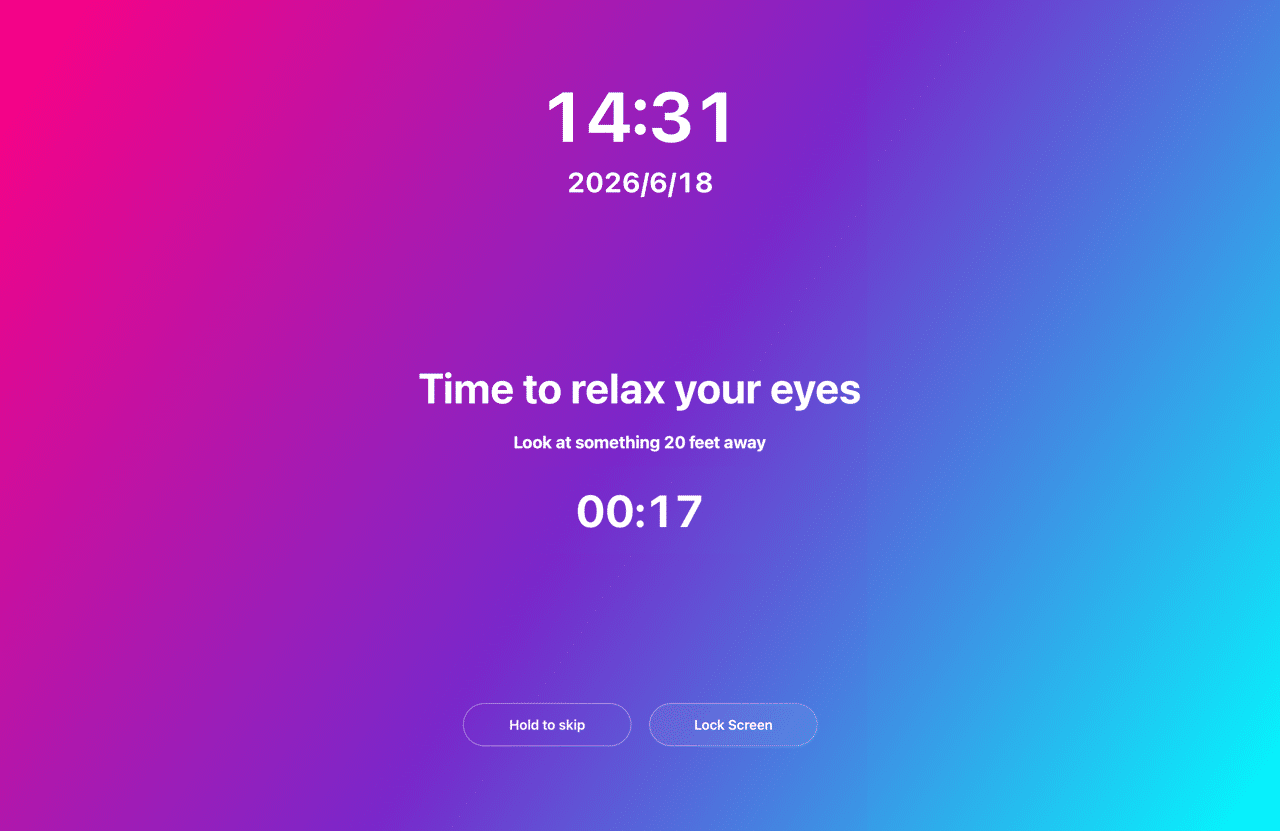
3. Automated Break Timer (The 20-20-20 Rule)
Prolonged screen use often leads to dry eyes, eye fatigue, neck pain, and difficulty focusing. This happens because when we stare at screens, our blinking rate drops dramatically.
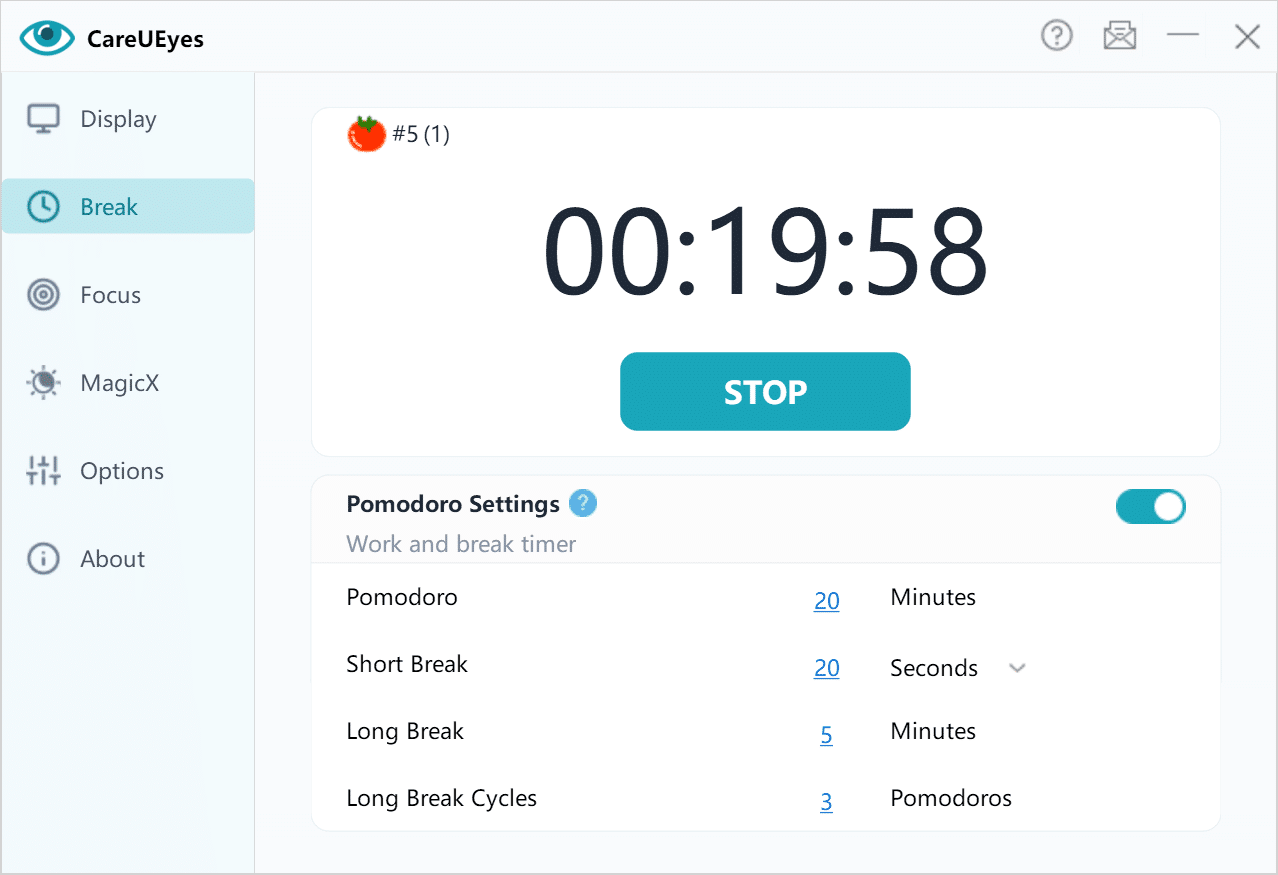
Eye care professionals recommend the well-known 20-20-20 rule to reduce this strain: Every 20 minutes, look at something 20 feet away for at least 20 seconds.
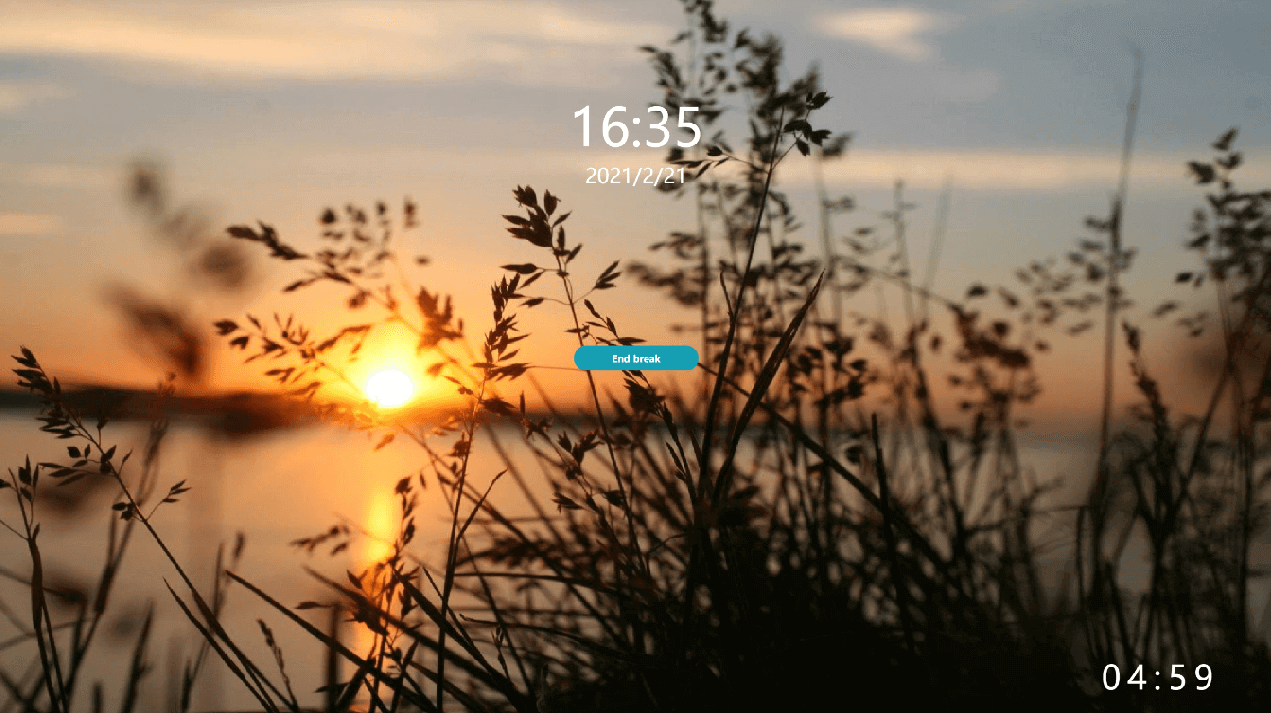
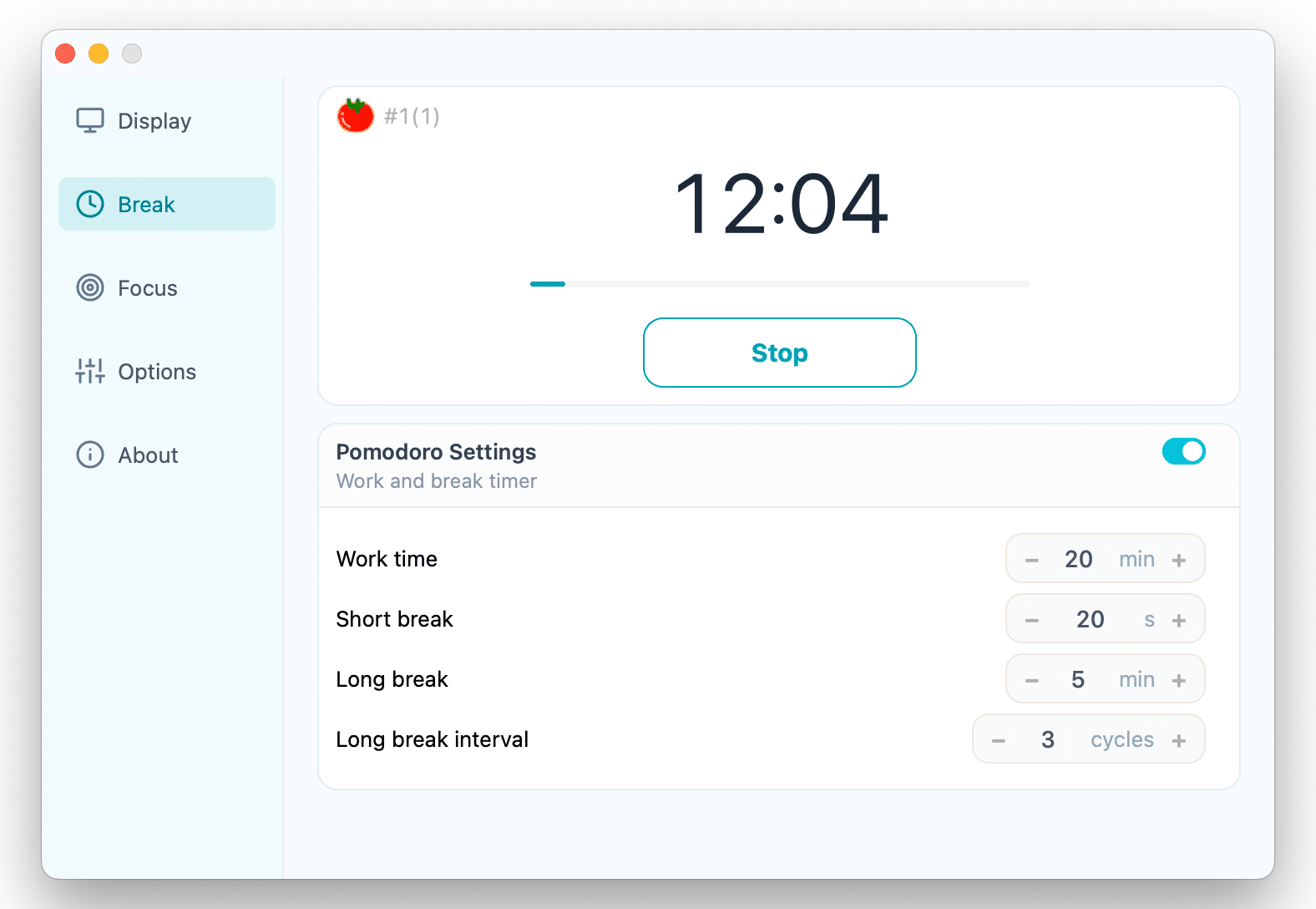
However, remembering to take breaks while concentrating on work is difficult. The CareUEyes Break Timer automates this healthy habit by providing gentle reminders to look away from the screen.
You can set short micro-breaks for quick eye relief or longer breaks to stretch and relax your neck and shoulders. These regular breaks help restore normal blinking, reduce eye dryness, and prevent long-term screen fatigue.
Combined with blue light filtering and smart brightness control, the break timer creates a complete solution for relieving digital eye strain symptoms.
Break timer
See the Difference Today
Digital eye strain shouldn’t be accepted as a “normal” part of using a computer. By filtering out harsh blue light, optimizing your screen’s brightness, and reminding you to take vital breaks, CareUEyes provides an all-in-one shield for your vision.
Ready to reduce digital eye strain and protect your vision?
Download CareUEyes today and experience a more comfortable and productive digital life.
While CareUEyes is a powerful tool designed to significantly reduce digital eye strain and improve visual comfort, it is not a substitute for professional medical advice.
If your symptoms—such as severe blurred vision, persistent headaches, or eye pain—continue even after using eye protection tools and taking regular breaks, we strongly recommend consulting a licensed eye care professional (optometrist or ophthalmologist). Routine eye exams are essential to rule out underlying vision problems and ensure your long-term eye health. Use CareUEyes as your daily shield, but listen to your eyes first.
Is your screen still too bright—even at the lowest setting? A reliable screen dimmer for PC can help you lower screen brightness and improve comfort.
Why You Need a Screen Dimmer for PC
Built-in Windows brightness controls are often limited and may not provide enough adjustment for comfortable viewing. This issue becomes even more noticeable when using external or multiple monitors.
A screen dimmer for PC gives you more precise control over brightness, helping reduce eye strain during long hours of use—especially in low-light environments.
CareUEyes is an advanced screen brightness adjuster for PC that solves these problems. It can be used as both a screen dimmer and a screen brightener, giving you full control over your screen brightness in any lighting condition.
Unlike standard brightness controls, CareUEyes goes beyond your monitor’s hardware limits—dimming your screen down to just 1% with no flicker, while preserving natural colors and clarity. It also works seamlessly across single, external, and multiple monitors for consistent brightness control.
CareUEyes is a powerful screen dimmer for Windows 11 and 10, with additional support for legacy systems like Windows 8, 7, and XP.
High-Precision Screen Brightness Control for PC (1% Increments)
Many screen dimmer tools offer only a few fixed brightness levels, which limits precise screen brightness control. CareUEyes works as an advanced screen brightness controller, allowing you to adjust brightness in precise 1% increments. This level of screen brightness control lets you fine-tune your display to the exact brightness level you need, whether you’re working at night or in low-light environments.
Multi-Monitor Brightness Control
CareUEyes works as a powerful screen brightness reducer that lets you control brightness across multiple monitors.You can:
Synchronize brightness across all monitors simultaneously
Adjust brightness for each monitor independently
Ideal for developers, designers, and multi-monitor workstations.
Preset Screen Brightness Modes for Different Activities
CareUEyes includes preset screen brightness modes that allow quick switching between different usage scenarios — Reading, Office, Movie, Night, and Custom. Switch with a click or assign a hotkey.
Automatically Adjust Screen Brightness Based on Time of Day
CareUEyes can automatically adjust brightness throughout the day. Brightness gradually changes based on local sunrise and sunset times, creating a smooth transition between daytime and nighttime brightness levels.
Benefits include:
Reduced eye strain
Natural adjustment matching your environment
Automatic brightness changes without manual input
Use Hotkeys and Quick Controls to Adjust Screen Brightness on PC
CareUEyes allows quick brightness adjustments without opening the main application. Brightness can be controlled via:
Keyboard hotkeys
System tray brightness slider
Presets
Blue Light Filter for Eye Protection
Blue light exposure can contribute to eye strain. CareUEyes includes a blue light filter feature that reduces blue light while maintaining comfortable screen colors.
Why CareUEyes Is a Better Screen Brightness Controller
Lower Screen Brightness with Gamma-Based Dimming
Many screen dimmer tools lower screen brightness by placing a dark overlay. While this approach can reduce visible brightness, it often causes several problems:
Reduced contrast and washed-out colors
Screenshots capture the darkened overlay
Overlay disappears in full-screen applications (games, video)
Unreliable on multi-monitor setups
CareUEyes uses a different approach. Instead of a dark overlay, it adjusts the screen’sgamma levels. This modifies how the GPU renders every pixel, so the screen genuinely outputs less light — without adding any layer on top. The result is more natural dimming that works consistently across different monitor types and remains active in full-screen applications.
Screen Dimmer That Works in Fullscreen Games and Video on PC
Many screen dimmers fail to function in games or video apps. CareUEyes utilizes GPU-level gamma adjustment, ensuring your brightness settings stay active even in full-screen games and streaming sessions without any flickering or resets.
CareUEyes vs Other Screen Dimmer Tools
Feature
CareUEyes
Dimmer (Nelson)
DimScreen
f.lux
Brightness Adjustment Method
Gamma (GPU-level)
Dark overlay
Dark overlay
Color shift
Brightness Precision
1% increments (high precision)
Basic slider
10 fixed levels
⚠️Limited
Dim Below System Minimum
✅Yes
✅Yes
✅Yes
⚠️Limited
Multi-Monitor Support
✅ Full control (per display)
⚠️Limited
❌No
❌No
Blue light filter
✅Built-in
❌No
❌No
✅Built-in
Screenshot Compatibility
✅ No impact
❌Affected
❌Affected
✅No impact
Full-Screen App Support
✅Stable
Sometimes fails
Sometimes fails
✅Stable
Auto Brightness / Scheduling
✅Yes
❌No
❌No
✅Yes
Preset Modes (Scene Modes)
✅Yes
❌No
❌No
Limited
If you need a solution that supports full-screen gaming, independent multi-monitor adjustment, and crystal-clear screenshots, CareUEyes is the most professional choice on the market.
“With several modes to choose from and customizable brightness levels, I’m no longer forced to stare bright-eyed for long hours at the computer.”
— Kurty Wong
★★★★★
“Great software for sensitive eyes. It easily adjusts color and brightness settings, and it even reminds you to take breaks during long computer sessions.”
— Brian Bloch
★★★★★
“I was looking for a dark mode for the whole screen. After trying the trial version and exploring the features, I was impressed and decided to buy the lifetime license.”
— William McGroarty
★★★★★
“Commendable brightness and color adjustments plus break reminders. Exactly what I needed for long workdays.”
— Heinrich Müller
★★★★★
“I recommend this eye protection software, especially if you need to work on the computer for several hours daily.”
— Daniel Cañizares Corrales
★★★★★
“This software has a great range of features that works perfectly out of the box. It’s a must-have for anyone who uses a computer for extended periods.”
— Richard Brus
How to Lower Screen Brightness with CareUEyes
Getting started takes less than two minutes:
Install and launch CareUEyes
Open the main interface from the system tray
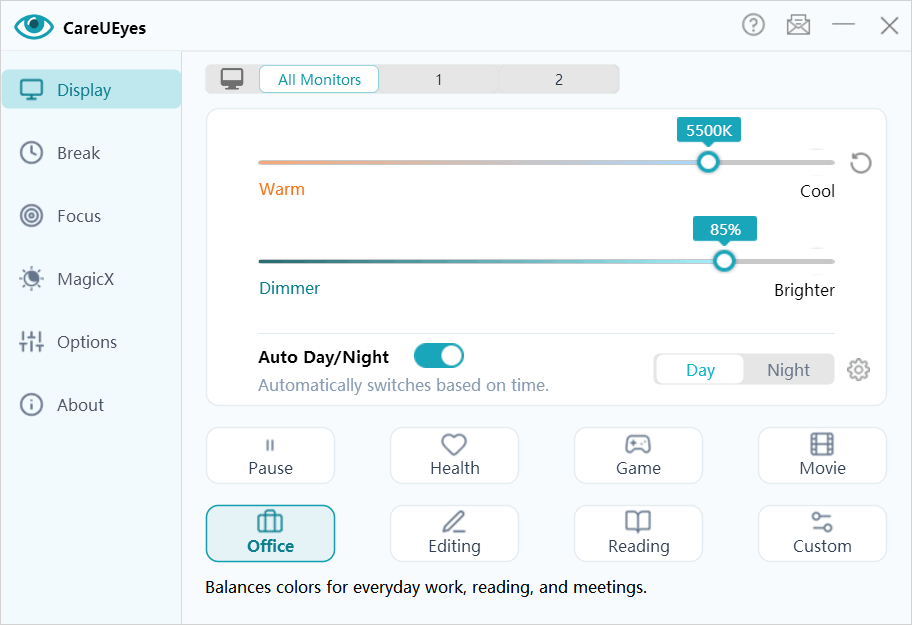
Select your monitor (Optional): If you have multiple displays, use the dropdown to choose “All Monitors“ to sync brightness across every screen, or select a specific monitor to adjust it independently. If you only have one screen, you can skip this step.
Choose a preset mode (Health or Office)
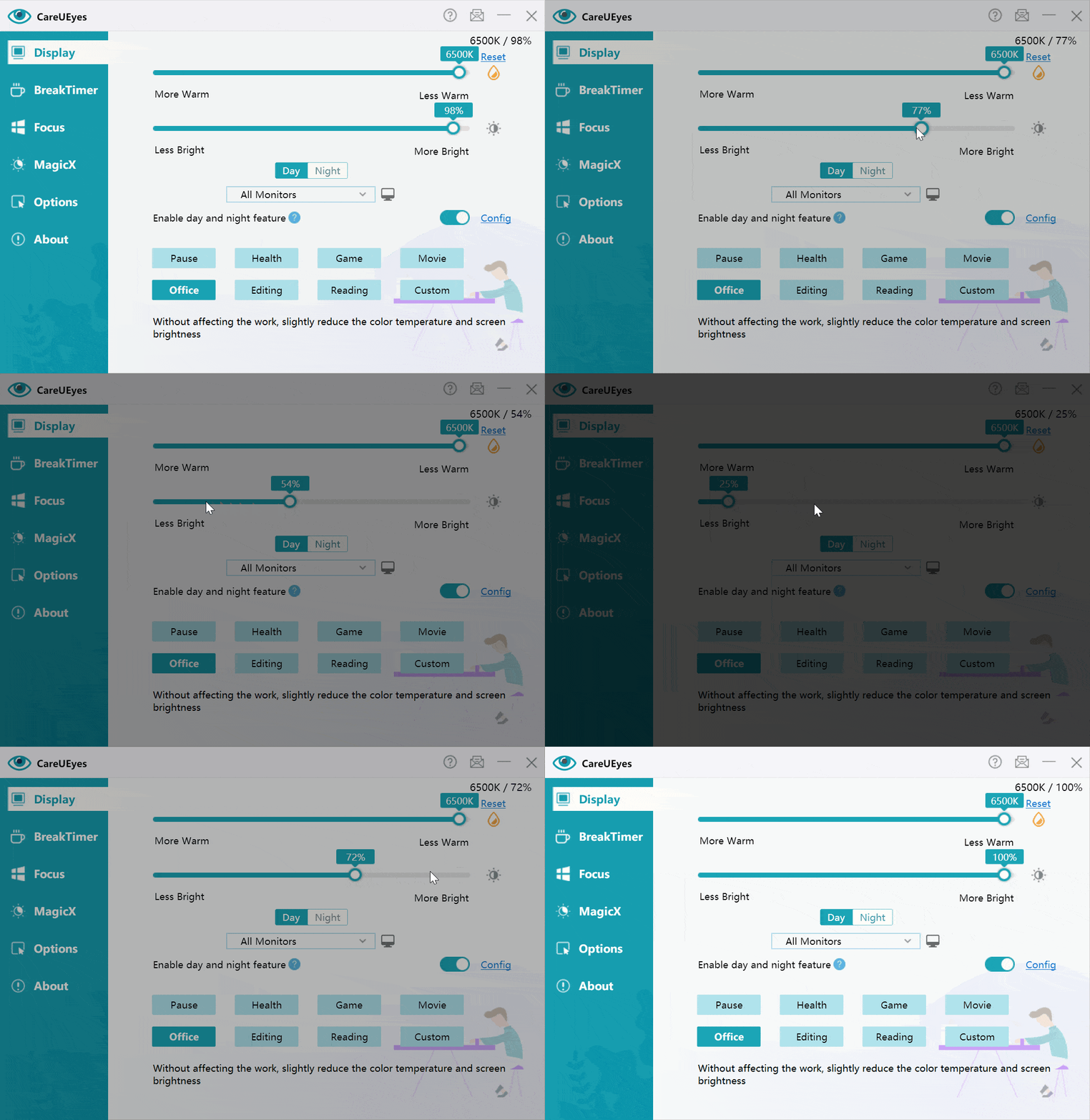
Drag the brightness slider to your preferred level: slide to the left to lower screen brightness, and to the right to increase it
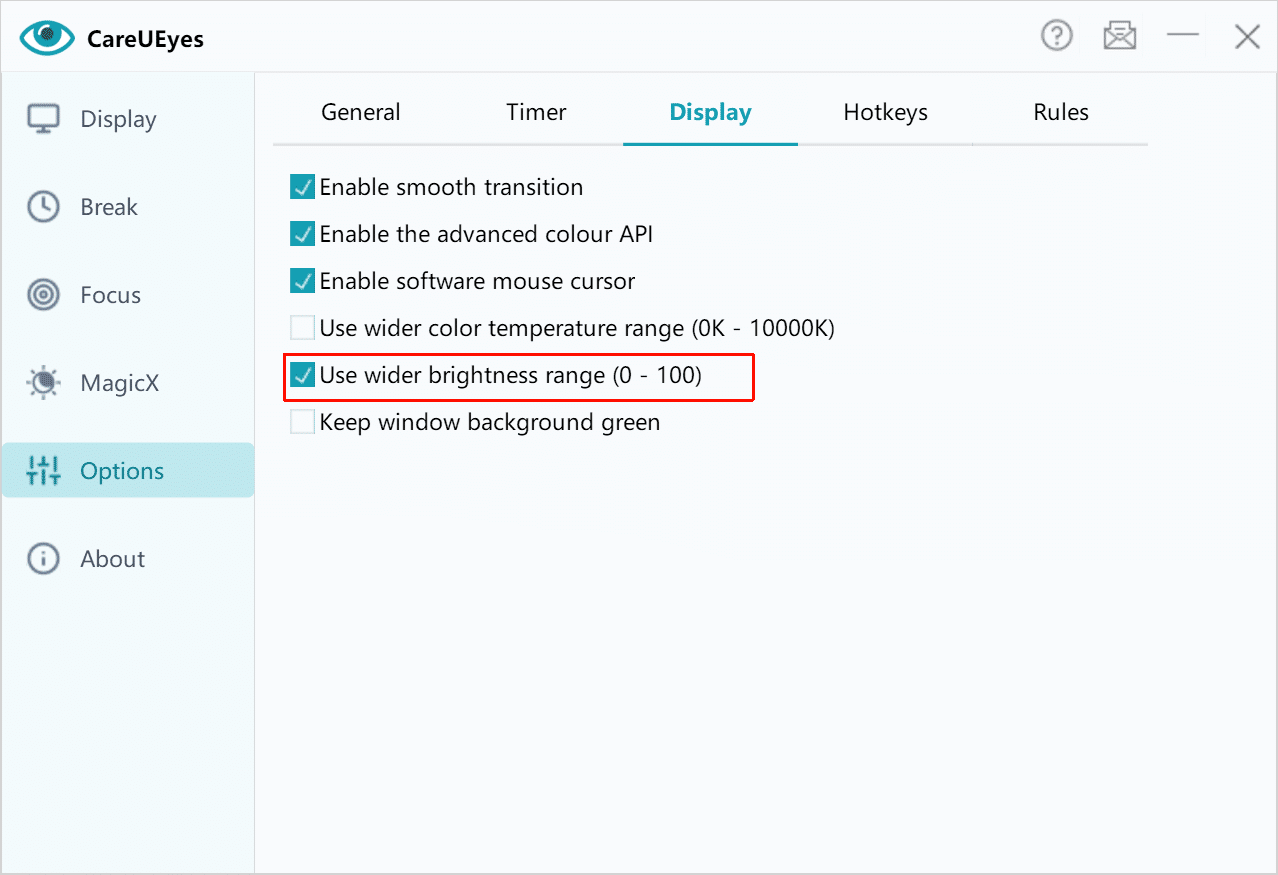
Note: For even deeper dimming, go to Options > Display and check “Use wider brightness range (0-100)”.
Screen Dimmer for PC FAQs (Common Questions Answered)
Can a screen dimmer lower screen brightness with Gamma-Based Dimming below the system limit?
Yes. Your system brightness slider is limited by your monitor’s hardware floor. CareUEyes adjusts gamma through the graphics driver independently of that limit, so you can reduce perceived brightness well below what the system slider allows — even down to 1%.
Does screen dimming affect screenshots?
Not with CareUEyes. Gamma adjustment changes how the monitor renders the signal, not the underlying pixel data. Screenshots capture the original data before gamma is applied, so they remain at full brightness regardless of your dimming setting. Overlay-based dimmers do affect screenshots.
Can I use a screen brightness darkener with multiple monitors?
Yes. CareUEyes controls each connected monitor independently. You can set different brightness and color temperature values per display, or sync all monitors with one click. This works with any number of monitors, including mixed-resolution setups.
Can brightness be controlled with hotkeys?
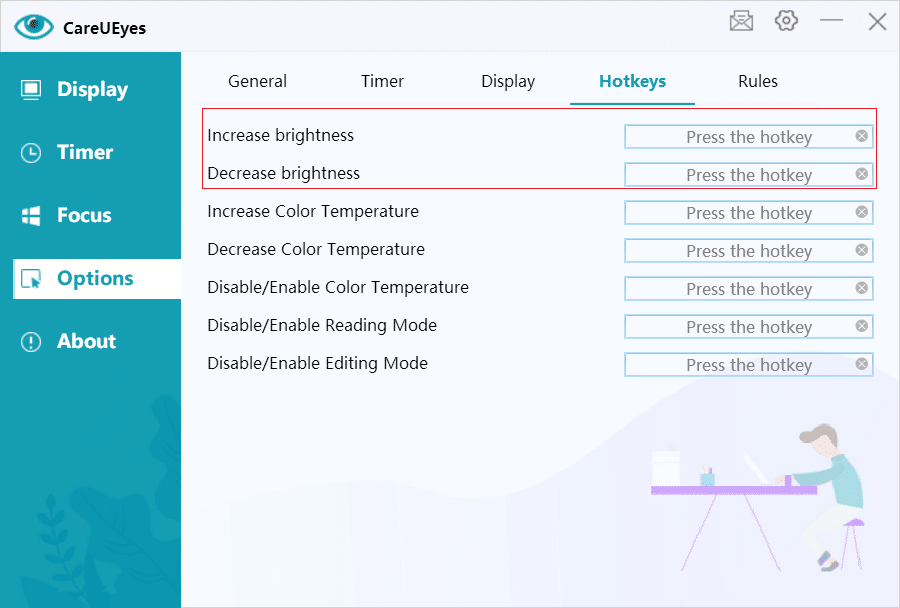
Yes. CareUEyes supports configurable keyboard shortcuts to increase or decrease brightness, toggle the blue light filter, and switch between scenes — without opening the app. All shortcuts can be customized in the app settings.
Will screen dimming software damage my monitor?
No. Gamma adjustment changes the signal your GPU sends to the monitor. No electrical stress is placed on the display hardware. The monitor simply renders what it receives, exactly as it always does. Neither gamma dimming nor hardware backlight dimming causes wear or damage.
Why does my screen brightness keep changing automatically?
This is almost always caused by adaptive brightness — a system feature that uses an ambient light sensor to auto-adjust backlight intensity. Disable it in your system display settings (“Change brightness automatically when lighting changes”) for full manual control with CareUEyes.
Does CareUEyes work with external monitors via HDMI or DisplayPort?
Yes. Gamma adjustment applies to all monitors connected through your GPU, regardless of cable type. HDMI, DisplayPort, USB-C, and DVI are all supported. The only exception is monitors connected via USB display adapters that use their own independent rendering pipeline.
Can a screen dimmer help with migraines?
Bright screens are a recognized migraine trigger for people with photophobia. CareUEyes allows dimming well below the system minimum — often to 10–20% — which can meaningfully reduce visual stimulus. It also combines brightness reduction with a blue light filter in a single tool. For medical advice specific to your condition, consult a neurologist or headache specialist.
Does screen dimmer software affect gaming or video performance?
No. Gamma adjustment happens at the driver level and adds no rendering overhead. CareUEyes does not hook into graphics APIs (DirectX, OpenGL, Vulkan) or inject overlays, so gaming and video performance are completely unaffected.
What is the difference between software dimming and monitor OSD brightness?
Monitor OSD controls the physical backlight and has a hardware floor below which it cannot go. Software gamma dimming adjusts the GPU signal to the monitor and can go below that floor. Software dimming also works across all monitors from one app, supports scheduling and automation, and requires no physical button access on each monitor.
Download Screen Dimmer
If your screen is still too bright even at the lowest brightness setting, a screen dimmer can make a big difference.
CareUEyes lets you dim screen brightness below the system minimum, making your display more comfortable for night use or dark environments. With features like multi-monitor support, hotkeys, and precise brightness control, it’s an easy way to reduce eye strain while working on your PC.
Download CareUEyes and start dimming your screen in seconds.
If your computer screen is too bright at night, even when the brightness is set to the lowest level, you are not alone. Many users experience eye strain when using their computer in dark environments.
Bright screens can cause discomfort, headaches, and difficulty focusing, especially during late-night work or reading.
One effective solution is using a screen dimmer that can reduce brightness below the system limit and make the display more comfortable for nighttime use.
Why Your Screen Is Too Bright at Night
There are several common reasons why your screen may feel too bright at night.
1. Minimum brightness is still too high
Many monitors have a hardware brightness limit. Even at the lowest setting, the screen may still appear too bright in dark environments.
This is especially common with:
external monitors
high-brightness displays
desktop monitors designed for daylight use
2. Room lighting is dark
At night your eyes become more sensitive to light. A screen that feels comfortable during the day may feel extremely bright in a dark room.
3. Blue light from the display
Computer screens emit blue light that can increase glare and contribute to eye strain during nighttime use.
How to Reduce Screen Brightness at Night
There are several ways to make your screen more comfortable when using your computer at night.
Method 1: Lower the monitor brightness
Most monitors allow brightness adjustment using built-in controls.
Steps:
Press the menu button on your monitor
Navigate to brightness settings
Reduce brightness to the lowest level
However, many users find that the lowest brightness is still too bright.
Method 2: Enable Night Light in Windows
Windows includes a feature called Night Light, which reduces blue light and makes the screen warmer.
Steps:
Open Windows Settings
Go to System → Display
Turn on Night Light
Night Light can reduce glare slightly, but it does not lower brightness beyond the monitor’s limit.
Method 3: Use Dark Mode
Dark mode reduces bright white backgrounds in applications.
You can enable dark mode in:
Windows settings
web browsers
many productivity apps
While this helps reduce glare, it still does not reduce the actual screen brightness.
Method 4: Use Screen Dimmer Software
If your screen is still too bright at night, the best solution is to use a screen dimmer.
A screen dimmer can:
reduce brightness below the system limit
dim the screen further than monitor controls allow
improve comfort when using the computer at night
For example, using a screen dimmer like CareUEyes allows you to reduce brightness below the system limit and adjust brightness more precisely.
CareUEyes also supports multi-monitor brightness control, hotkeys, and automatic brightness adjustment based on sunrise and sunset.
Some users find that even very low brightness levels are still too bright, especially when working late at night in a completely dark room.
By default, CareUEyes allows brightness adjustment between 10% and 100% to ensure stable display output.
However, CareUEyes also includes an option called “Use wider brightness range (0–100)”.
After enabling this option, you can reduce brightness all the way down to 0%, allowing the screen to become significantly darker than normal brightness controls allow.
This feature is particularly useful for:
working late at night
reading in dark environments
reducing eye strain during long computer sessions
With this extended brightness range, CareUEyes works as a powerful screen dimmer for users who need brightness levels lower than the system minimum.
Benefits of Using a Screen Dimmer
Screen dimmer software provides several advantages compared with built-in system settings.
More precise brightness control
Some dimmer tools allow brightness adjustments in very small increments, making it easier to find a comfortable level.
Better comfort at night
Lower brightness can reduce eye strain and make it easier to work or read at night.
Works across multiple monitors
Many users today work with two or more monitors. Screen dimmers allow brightness control across all displays.
When a Screen Dimmer Is Most Useful
A screen dimmer is especially helpful in situations such as:
working late at night
reading on the computer in a dark room
using external monitors that cannot dim enough
multi-monitor setups with inconsistent brightness
In these situations, reducing brightness further can significantly improve visual comfort.
Frequently Asked Questions
Why is my screen still too bright at the lowest brightness?
Some monitors have hardware brightness limits that cannot be reduced further using system controls.
Can Windows reduce brightness below minimum?
No. Windows brightness settings cannot go below the hardware limit of the display.
Is it safe to use screen dimmer software?
Yes. Screen dimmer software adjusts display output through software and does not modify monitor hardware.
Conclusion
If your screen is too bright at night, adjusting system brightness or enabling Night Light may help slightly. However, these methods often cannot reduce brightness enough for comfortable nighttime use.
Using a screen dimmer like CareUEyes allows you to dim the screen further and create a more comfortable viewing experience when working or reading in low-light environments.
There are many cracked versions of CareUEyes available online, but using pirated software comes with serious security risks. It can easily lead to privacy leaks, and your data security cannot be guaranteed.
Why You Should Avoid Pirated CareUEyes Software
1. Carry a virus.
Many pirated software bypass the authentication by modifying the code of the main program, and then add viruses/Trojan horses to the code to gain benefits. Blindly downloading pirated software can cause virus infection to the computer. The information/data entered by the user on the computer will be passed into the hands of criminals through the back door, and then be resold, resulting in leakage of personal data and privacy, and serious financial losses.
2. Destroy the computer system.
Pirated software may damage the computer system and affect normal use.
3. Unstable function
The code of pirated software has been “modified later”, so there will be some problems in stability
4. Unable to enjoy user services.
Pirated CareUEyes do not enjoy software upgrade services, cannot use new functions, and are not entitled to technical support and after-sales service provided by the developer. When users of pirated software find defects and errors in some functional modules during the use of the software, they can only passively endure them, and the discovered problems will never be solved.
How to get the genuine CareUEyes license code
Purchase: Enter the CareUEyes official website, visit the website purchase page https://sowl.co/mo7UB to make a purchase, and you can get the CareUEyes genuine license code after the purchase is completed.
In order to call on users to use genuine software and avoid harmful harm caused by cracked software, CareUEyes officially provides a 30% discount code for a limited time. The discount code will expire on June 18, 2022.
Discount code: 27b91354c1, only valid for CareUEyes Premium .
After obtaining the official license code of CareUEyes, directly enter the license code into the text box for entering the key, and click “Activate” to activate the software.
Installing genuine CareUEyes can experience a more complete and comprehensive service system. At the same time, CareUEyes will upgrade the software and develop more perfect new functions for users in a timely manner. For more information on CareUEyes updates, please follow the page https://care-eyes.com/release.html in real time.
For official technical support, please send an email to [email protected]
As a software developer, I’m glued to my screens all day—whether I’m running a dual-monitor setup or a triple-head rig. And for years, one thing absolutely drove me up the wall: the Windows 10 brightness control. Sometimes it works fine, but other times, it just completely flakes out on me.
If you’ve ever plugged in an external monitor and found that the brightness slider disappeared, you’re not alone. Let me explain why this happens — and how I fixed it for myself (and maybe for you too).
💡 The Problem with Windows Brightness Settings
Windows does offer several ways to adjust brightness:
Settings → Display → Brightness slider
Action Center quick controls
Fn keys on laptops
But here’s the catch: These only work under specific conditions. For example:
You must be on a laptop with integrated display
You must use eDP or LVDS connections (internal display types)
HDMI, DisplayPort, or USB-C displays? No dice — Windows can’t change their brightness
This means if you’re:
Using an external monitor
Connecting through HDMI / DP / USB-C
Running multiple displays
Then your brightness slider might be missing, grayed out, or completely useless.
As a developer, that’s unacceptable — especially when working at night or trying to reduce eye strain.
🔧 My Solution: CareUEyes
I developed CareUEyes to address this very issue, providing a more reliable brightness controller than the standard Windows settings. Instead of relying on hardware brightness (which Windows is often blind to), it uses a software-based brightness layer that:
Works with any monitor, no matter the connection type
Doesn’t depend on graphics card drivers or system-level support
Lets you dim the screen even below the system minimum
If you’ve tried everything — drivers, GPU settings, random registry hacks — and still can’t dim your screen on certain monitors, it’s not you. It’s Windows. It simply wasn’t built for modern multi-monitor setups with flexible brightness needs.