 CareUEyes
 If you’ve been searching about the blue light effect on eyes, you’ve likely seen conflicting advice.
Some say it damages your eyes. Others say it’s harmless.
The reality is more practical—and more useful:
Blue light is not the main cause of eye problems, but it does contribute to eye strain and sleep disruption, especially with long screen use.
This guide explains what actually matters—and how to reduce eye strain effectively.
Is Blue Light Bad for Your Eyes?
This is the most common question—and the answer is nuanced.
- There is no strong evidence that blue light from screens causes permanent eye damage
- However, extended exposure can lead to digital eye strain
- Nighttime exposure can interfere with sleep cycles
In short:
Blue light is not dangerous in normal use, but it affects comfort and sleep
What Causes Eye Strain from Screens? (Not Just Blue Light)
Focusing only on blue light is misleading.
Eye strain is caused by a combination of:
- Long periods of screen use
- High screen brightness
- Poor lighting conditions
- Reduced blinking
- Cool (blue-heavy) color temperature
This explains why:
You can still feel eye strain even if you reduce blue light alone
How Blue Light Affects Your Eyes
1. Increased Visual Stress
Blue light scatters more than other wavelengths:
- Reduces contrast
- Increases glare
- Forces your eyes to work harder
2. Sleep Disruption
Blue light exposure at night:
- Suppresses melatonin
- Delays sleep onset
3. Eye Fatigue (Most Noticeable Effect)
Common symptoms:
- Dry eyes
- Blurred vision
- Headaches
- Difficulty focusing
Where Does Blue Light Exposure Come From?
Blue light is everywhere:
- Sunlight (strongest source)
- LED lighting
- Computer screens and phones
Important:
Although screens emit less blue light than the sun, they cause more problems because:
- You look at them for hours
- They are very close to your eyes
How to Reduce Eye Strain from Screens
1. Follow the 20-20-20 Rule
Every 20 minutes:
- Look at something 20 feet away
- For 20 seconds
2. Lower Screen Brightness
Avoid overly bright displays, especially in dark environments.
Using a screen dimmer can help reduce glare and visual fatigue.
👉Learn how a screen dimmer can reduce eye strain
3. Use Warmer Color Temperature at Night
Cool light is harsher at night.
Switching to warmer tones:
- Reduces strain
- Helps improve sleep👉Use a blue light filter for PC to automatically adjust color temperature at night
4. Take Regular Breaks
Short, consistent breaks are more effective than long, occasional ones.
The Easiest Way to Reduce Blue Light and Eye Strain
The biggest challenge isn’t knowing what to do—it’s doing it consistently.
Most users:
- Don’t adjust brightness regularly
- Forget to reduce blue light at night
- Skip breaks
PC eye protection software can automate these adjustments.
For example, CareUEyes can:
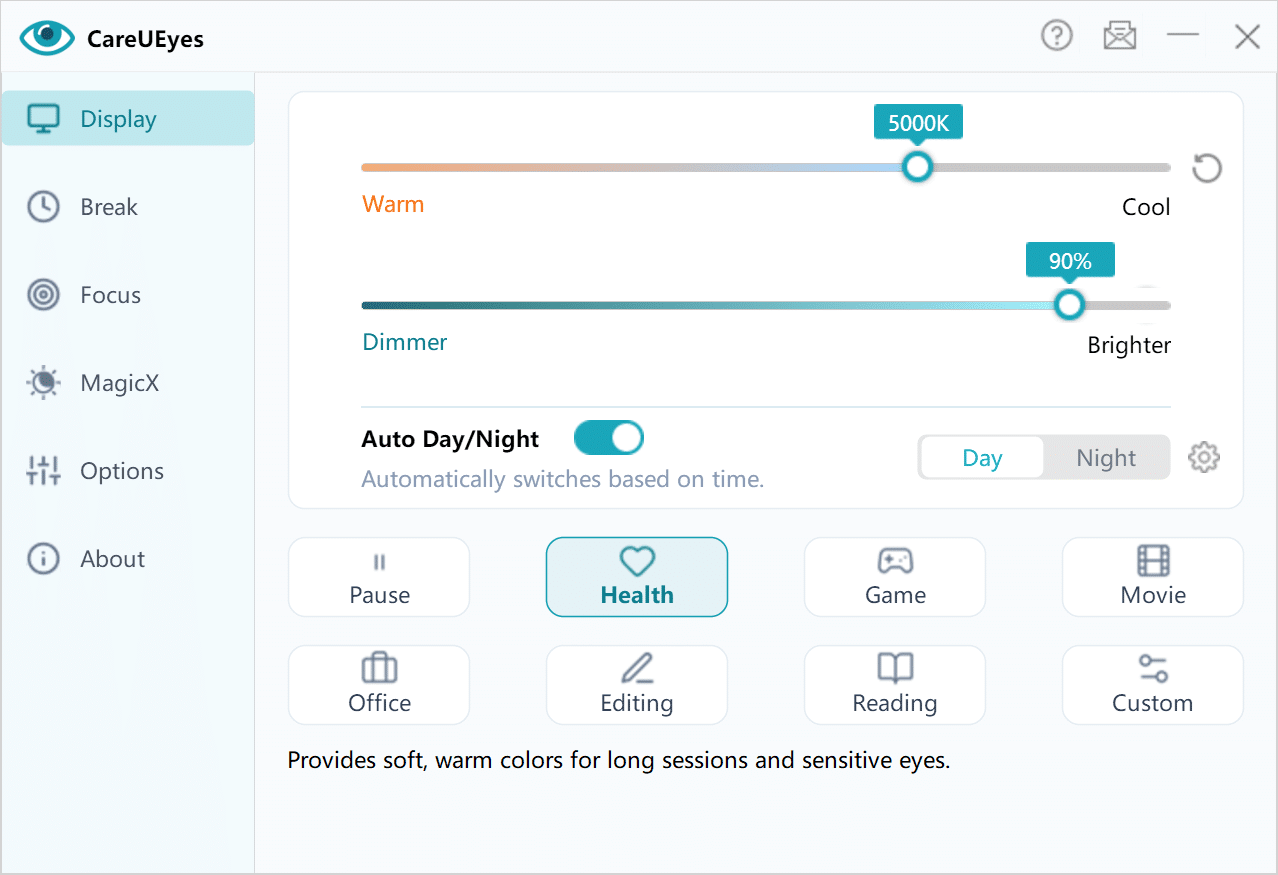
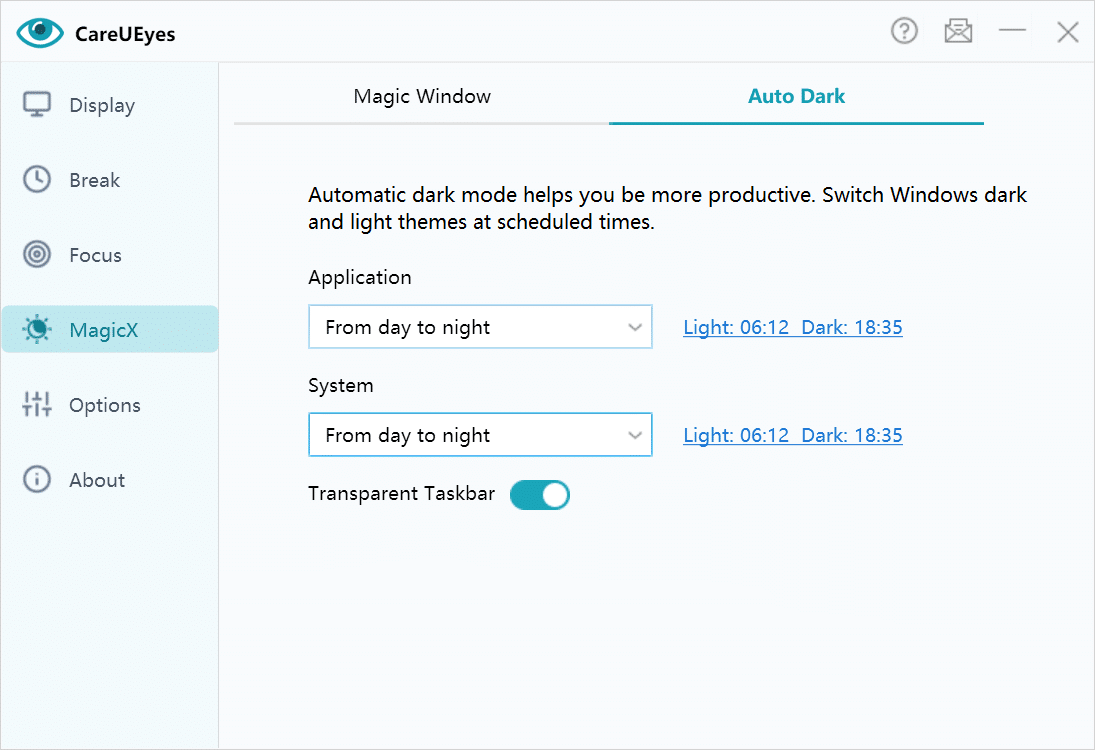
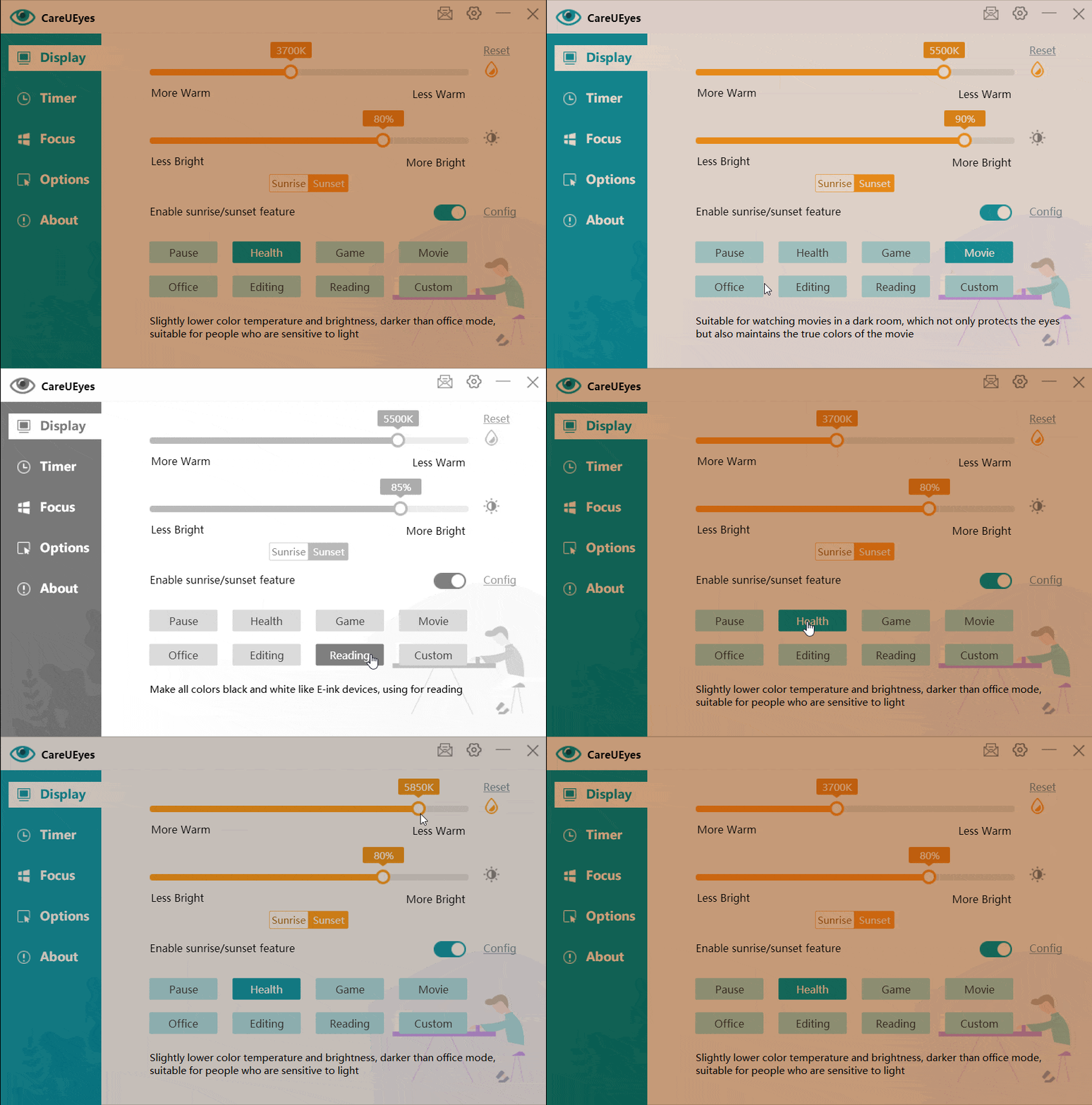
- Automatically adjust color temperature
- Work as a smart screen dimmer
- Remind you to take breaks
- Keep your screen optimized throughout the day
FAQ: Blue Light and Eye Strain
Can your eyes recover from blue light exposure?
Yes. Eye strain from blue light and screen use is usually temporary and improves with rest.
What is the 20-20-20 rule?
It’s a simple method to reduce eye strain:
Every 20 minutes, look 20 feet away for 20 seconds.
Does blue light cause permanent eye damage?
Current evidence does not support that normal screen exposure causes permanent damage.
Do blue light glasses really work?
They may improve comfort for some users, but they don’t solve all causes of eye strain.
Is blue light worse at night?
Yes. Nighttime exposure can disrupt sleep by suppressing melatonin.
Final Thoughts
The real blue light effect on eyes is often misunderstood.
- It’s not as harmful as many claims suggest
- But it does contribute to eye strain and sleep issues
The key is not to eliminate blue light completely, but to:
- Optimize your screen settings
- Reduce prolonged exposure
- Use tools that make eye care automatic